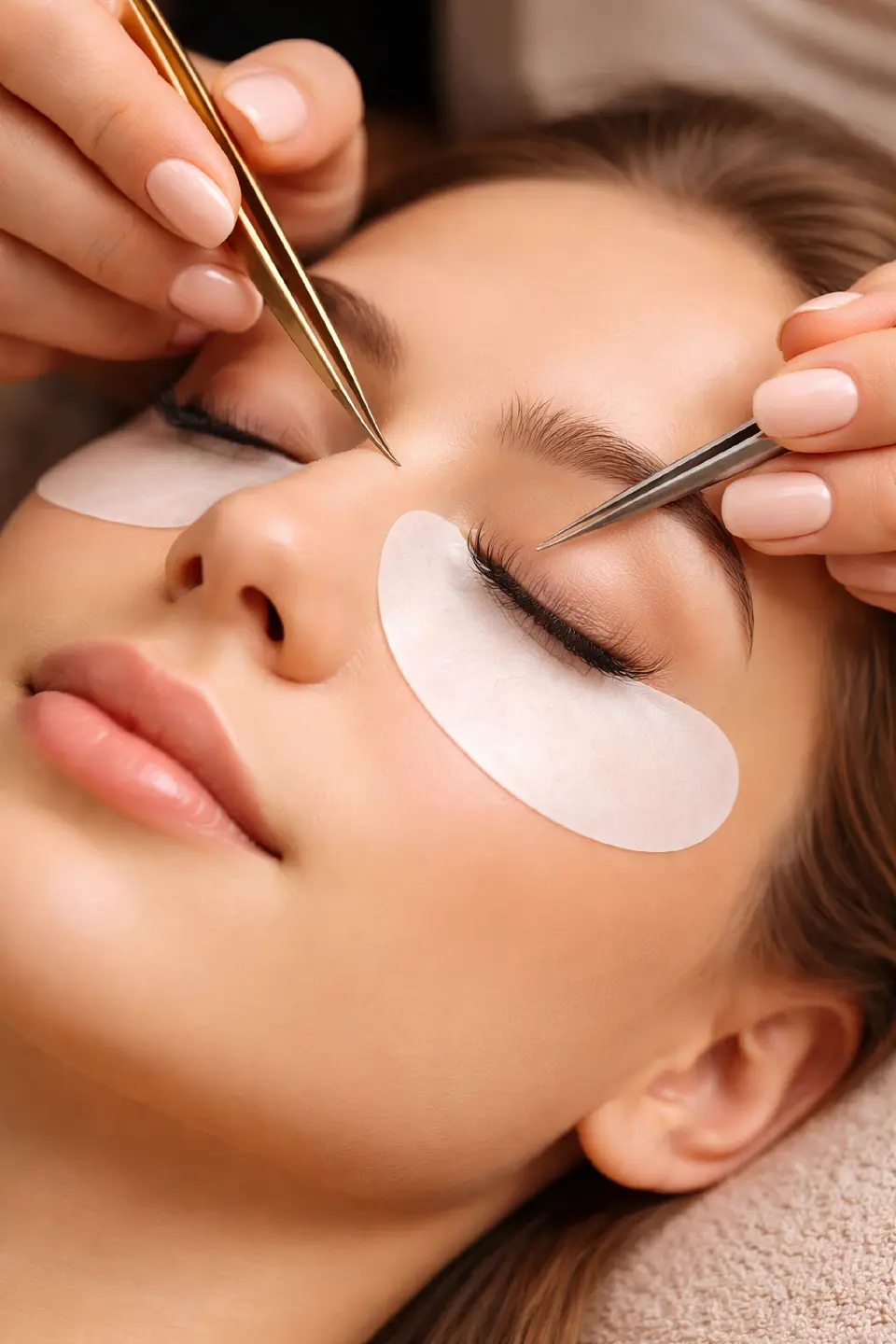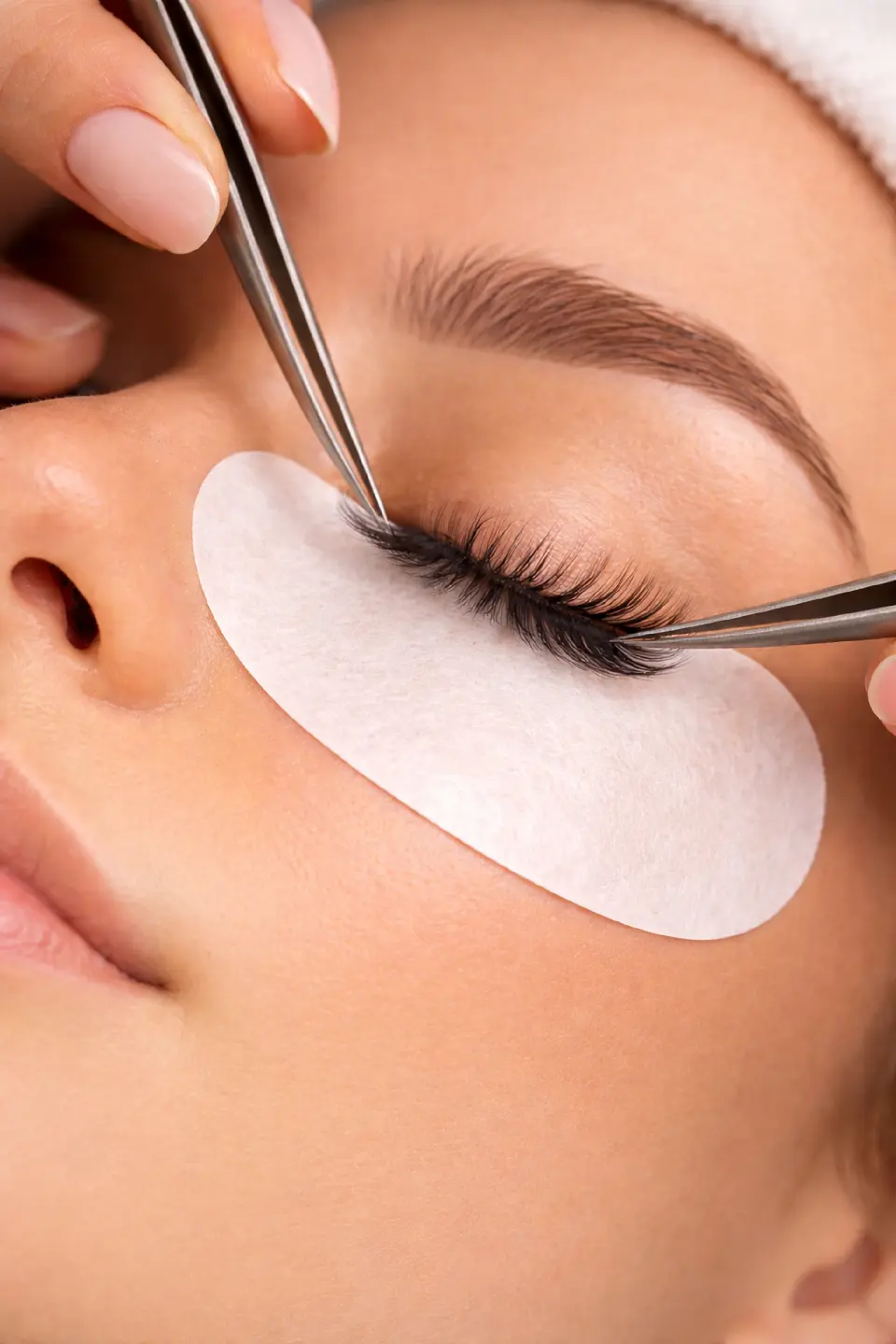
Does a lash lift damage your lashes? The honest answer
A lash lift done carefully, on healthy lashes, no more often than every 6–8 weeks, shouldn't damage your lashes. Most clients see no change to their lashes at all once the lift grows out. But a lift is a chemical treatment – it changes the structure of the lash so it holds a new shape – and that means it can go wrong. When it does, the cause is almost always one of four things: lashes processed for too long, lifts repeated too soon, the wrong shield for the lash, or a reaction to the products.
So the useful question is not just "does a lash lift damage your lashes?" but "what does a careful lift look like, and how do I know I'm getting one?" That is what this guide covers.
What a lash lift actually does to a lash
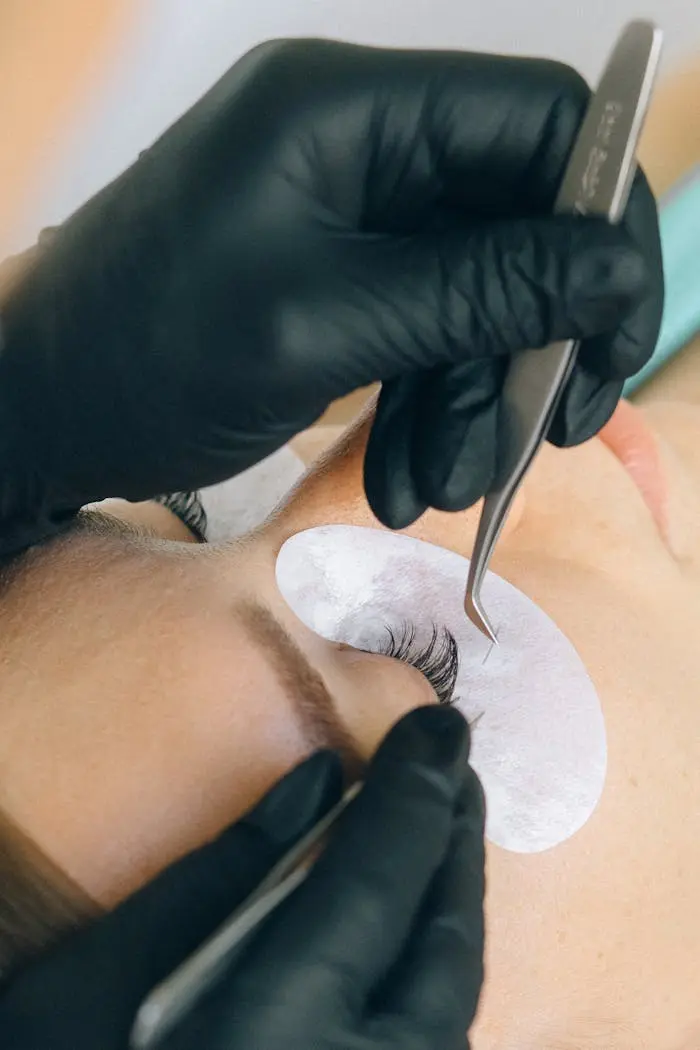
Each lash is made of protein held together by internal bonds that give it its shape – straight, slightly curved or pointing down. A lash lift works in two stages, much like a perm for hair:
- The lifting solution softens some of those bonds, so the lash can be bent around the silicone shield.
- The setting solution re-forms the bonds in the new, curved position, so the lash keeps that shape once the shield comes off.
Done for the right length of time, this changes the shape and little else. Left on too long, or applied to lashes that were lifted only a few weeks earlier, the solution softens more than it should, and the lash comes out weaker, drier and frizzier. That is why timing – both within the appointment and between appointments – matters more than anything else.
Lash lift gone wrong: what can happen
These are the problems people mean when they search "lash lift gone wrong", what they look like and what usually causes them:
| Problem | What it looks like | Usual cause |
|---|---|---|
| Over-processing | Frizzy, dry or crinkled lashes, kinked tips, a dull look | Solution left on too long for fine lashes, or lifting lashes that were lifted recently |
| Over-curling | Lashes bent back towards the lid, an "L" shape or a pressed-flat look | Shield too small for long lashes |
| Too little lift | Hardly any change, or a curl that drops within days | Shield too large, too little processing, or lashes wet or oily in the first 24–48 hours |
| Crossed or uneven lashes | Lashes pointing in different directions, gaps in the line | Lashes not separated carefully on the shield |
| Breakage or more shedding than usual | Short broken lashes, more lashes than normal on your pillow | Repeated lifts too close together, already brittle lashes, a lash curler or rubbing |
| Irritation | Stinging, redness or watering during or after the appointment | Product touching the skin or eye, or a sensitivity to the products |
One thing that is not a problem: lashes looking very curly or slightly crimped on day one. That usually softens into the final shape within a day or two once you brush them through.
Are lash lifts safe? How a careful artist avoids problems
Lash lifts are generally safe when the lash artist adjusts the treatment to the lashes in front of her rather than doing the same lift on everyone. In practice, that means:
- Asking about your history first – previous lifts and when, extensions, allergies, sensitive eyes, contact lenses and eye treatments.
- Looking at the lashes before lifting them. Dry, brittle or broken lashes should be left to recover, and an honest artist will say so.
- Choosing the shield for your lash length, so the curl lifts the lash instead of folding it.
- Timing the solutions to your lash type. Fine lashes need less processing than thick, coarse ones.
- Keeping product on the lashes and away from the skin of the lid and the lash line, with the lower lashes and skin protected.
- Separating every lash on the shield so none cross or bend.
- Clean tools and fresh disposables for every client.
- Saying no to a repeat lift that is too soon, or to a lift when extensions would serve you better.
You keep your eyes closed throughout. If anything stings or feels hot, speak up straight away – a good lash artist will stop, remove the product and check.
Book in under a minute
Choose your lash service and a time. WhatsApp opens with your booking – just tap send.
Lash lift side effects: what's normal and what isn't
Usually normal
- A very strong curl or slight crimp on the first day.
- Lashes feeling a little dry for the first day or two.
- Losing a few lashes a day – that is your normal shedding, lift or no lift.
Not normal – act on it
- Stinging, burning, itching or swelling that doesn't settle.
- Red, sore or very watery eyes after you leave.
- Lashes that feel rough or snap when you brush them.
If your eyes are red, swollen, itchy or painful after any lash treatment, don't wait it out – see a doctor. Then tell us, so your lash artist knows before your next appointment.
How often is too often?
For most people, the safe rhythm is a lift every 6–8 weeks – roughly as long as a lift lasts. By then most of the lashes from your last lift have shed and been replaced, so the new lift works mainly on fresh lashes.
Lifting at three or four weeks because a few lashes have dropped means processing the same lashes twice in a short space of time. Do that repeatedly and you get exactly the dry, frizzy, breaking lashes people worry about. If your lift fades too early, the answer is usually better aftercare or a different curl, not more lifts. Our guide to how long a lash lift lasts explains what shortens a lift and how to make it last.
Who should wait or check with a doctor first
- Eye infections, styes or irritated eyes – wait until your eyes have fully cleared.
- Recent eye surgery, including laser eye surgery – check with your doctor first and wait for their go-ahead.
- Pregnancy and breastfeeding – check with your doctor first.
- Eye conditions, chemotherapy or medication that affects your eyes, skin or hair – check with your doctor first.
- Very dry, brittle or broken lashes, for example straight after a heavy set of extensions – give them a few weeks to recover.
- Allergies or sensitive eyes – tell us in your booking notes and your lash artist will advise before anything is applied.
If you wear extensions now, they must come off before a lift. Don't pull them out yourself – a professional removal (AED 70) dissolves the adhesive so your natural lashes stay intact.
Aftercare that protects your lashes
- Leave your lashes alone for the first 24 hours – dry, no makeup, no rubbing.
- Never use a lash curler on lifted lashes. It bends them at a second point and is a common cause of breakage.
- Avoid waterproof mascara. It takes the most rubbing to remove, and rubbing is what weakens lashes.
- Remove makeup gently with an oil-free remover on a cotton pad held against the lashes, not scrubbed across them.
- Brush them up each morning with a clean spoolie, from the middle of the lash out – don't tug at the root.
- Don't pick or pull at loose lashes; let them shed naturally.
Adding a tint doesn't make a lift harder on your lashes, but it is another product near the eyes, so the same rule applies: mention any sensitivity first. Our eyelash tint page explains what a tint involves.
Is a lash lift gentler than extensions?
They carry different risks. A lift processes the lash itself, so its risks are over-processing and lifting too often. Extensions add weight to each natural lash and use adhesive, so their risks are overloading and reactions to the glue – we cover those separately in are eyelash extensions safe? Neither damages healthy lashes when done carefully. If you are still deciding whether a lift is the right treatment for you, read is a lash lift worth it? or see the details of our lash lift in Dubai.
| Service | Price | Book Now |
|---|---|---|
| Lash Lift (Lamination)Curls your own lashes · lasts 6–8 weeks | AED 159 | Book Now |
| Eyelash TintDarker lashes without mascara | AED 42 | Book Now |
Prices include VAT. No hidden extras.
Lash lift safety FAQ
Are lash lifts safe?
For most people, yes – when the lash artist checks your lashes first, times the solutions to your lash type and you wait 6–8 weeks between lifts. Tell us about allergies or sensitive eyes in your booking notes.
What are the side effects of a lash lift?
The most common are a very strong curl or slight crimp on day one and lashes that feel a little dry. Stinging, redness or swelling that doesn't settle is not normal – see a doctor.
Can a lash lift make your eyelashes fall out?
A careful lift shouldn't. Lashes shed every day anyway, so you will see a few. Breakage or heavy shedding usually comes from lifts repeated too soon, over-processing or rubbing.
What can I do if my lash lift went wrong?
Don't book another lift straight away – lifting damaged lashes again makes it worse. Keep them clean, brush gently and let them grow out. If your eyes are sore or red, see a doctor.
Can I get a lash lift while pregnant?
Please check with your doctor first. If they are happy for you to go ahead, mention your pregnancy in your booking notes so your lash artist knows.